Family Stories and Food, The Teen Loves Spice!

The Teen Loves Spice!

photo (7)

Ever since she was a tiny tot, the Teen loved spice. Now we are not talking about the tangy ting of a chicken wing or the gentle sensation of a frozen curry, we are talking a level of spice that would make even the most accomplished of eaters see their toes curl from the heat.

Her first outing to an Indian restaurant and she climbs up onto the big person’s chair. I order a main dish of highly spiced chicken and on enquiring what my daughter would like, I exclaim “No, that’s for her. I’m wimping out with the Butter Chicken.” The waiter scratches his head and off he goes.

Minutes later, he returns with the Chef. I am immediately on edge, worried that there may be some culinary problem or even a previously unknown issue of child abuse for letting the small person bathe herself so liberally in spice. Hesitantly I ask if there is a problem. The Chef answers: “No, I simply wanted to see the child who had ordered that level of spice.” She smiles sweetly and devours her meal when served. It is little surprise that she declared to the restaurant staff, that when she grew up she wanted to be an Indian – she sure has the palate for it!


Standard
Family Stories and Food, The Curative Properties of Food Stuffs

The Curative Properties of Food Stuffs…

photo (4)

My mum was a great one for old fashioned remedies. These were always tried before anything from the Chemists was bought. Invariably, we rarely needed anything else as she was careful to catch ailments in the earliest of stages.

As a small child, I balked when I saw what she was doing, thinking it had more to do with hocus pocus than having curative properties. I was proved wrong and had to convince my own teen that there was indeed method is such apparent madness.

Here are two such remedies my mum passed onto me.


Cold tea
When eyes are developing an infection and/or stye, cold tea can help to shrink the infection while calming any soreness or itchiness. Where the eye is infected, cotton wool dipped in cold tea can be used to clean the eye – making sure to sweep the eye very gently, away from the nose to the end of the eye. This can be repeated until the eye is completely clear.

Where a stye is developing, the eye can be cleaned as above. Cotton wool soaked in tea can also be used as a compress on the eye as this can help to relax the eye and shrink the stye.


Bicarbonate of Soda
When I was about 10 years old, I must have been very naughty as Santa brought me Chicken Pox for Christmas. While everyone was playing with their toys, I was more interested in tearing at my skin to relieve the pain.

Itching like a mad thing, my mother ran a bath, poured about a cup full of Bicarbonate of Soda into the streaming water and then plonked me into the bath, telling me to relax while the water worked its magic. And indeed it was magic as it so calmed the itch. Later on, when I emerged from the bath like a wrinkled prune, my mother basted me like a turkey in Calamine lotion to make sure the effect lasted longer.


Standard
Daal, Vegetarian

Falling back in love with cooking…

photo (3)

I haven’t been ‘round these parts lately. I could say it was because I had a technical problem with my Blog (true but not the reason). I could say it was because I was swamped with work (true but not the reason). The real truth is – I fell a little out of love with cooking.


I love cooking – reading recipes, designing my own, building up my spice and herb collection in anticipation of a new dish. I am a cooking nerd. While I often listened empathetically to women who say they hate cooking or would happily live on a diet of dried food and vitamin pills, I simply couldn’t get it.


Now I do.


With all the work, planning meals became a burden. I began to resent cooking. It became a necessity rather than an activity. I like to make everything from scratch but those days, reaching for a menu for what we affectionately refer to as ‘The Man with the Van’ became all too tempting. You order, it’s delivered, you eat, you feel guilty – what a pattern! The freezer was stocked and the veg drawer was laden with goodies but the notion of cooking made me feel so ‘meh!’


In the midst of this culinary downturn, I invited the girlies to my home for a long overdue lunch. When I set about thinking of cooking for others, I fell back in love with food all over again. For me, that notion of sharing with others remains at the heart of all my cooking. After seeing cooking as a temporary burden, I am even more appreciative of what motivates me now.


As there was a mix of vegetarians and meat eaters, I opted for Indian food which they all love. I made my list of dishes but the Teen swapped them around! Instead of chicken, she replaced it with a beef curry dish she loves and she added her all time comfort food to the list – Daal. The other dishes were Saag Aloo and Aloo Ghobi. The girlies happily feasted on all the dishes, drank some wine and chatted. Happy days!


The Daal I make is a mix of a number of recipes I’ve tried over the years – keeping the nicest bits from each. The Teen has declared this to be the winner!


Daal

Ingredients
1 chilli, deseeded and chopped finely
Handful of ripe cherry tomatoes
1 cup finely chopped red onion
5 ounces split pea lentils, washed
5 ounces red lentils, washed
1 ounce unsalted butter (omit if vegan)
2 tablespoons sunflower oil (increase to 3 tablespoons if omitting the butter)
Piece of ginger (about the size of an adult thumb), peeled and chopped finely
3-4 cloves of garlic, peeled and chopped finely
1 tablespoons cumin seeds
1 teaspoon garam masala
1 teaspoon turmeric
1½ teaspoon ground coriander
Salt and pepper
Cayenne pepper, optional
Fresh coriander, chopped
Natural yoghurt, optional


Method
1. Cover the lentils with water and simmer for 30 minutes with the lid on (may need to add water as they cook)
2. Melt the butter with the oil (or heat only oil) and fry the cumin seeds for about a minute
3. Add onion, chopped chilli and ginger cooking until onion is soft
4. Add the rest of the spices and cook for about a minute
5. Add the chopped tomatoes and garlic
6. Cook this mixture for about 10 minutes
7. Add to the cooked lentils
8. Add salt and pepper
9. If prefer a spicier taste, add a pinch of Cayenne Pepper
10. This can be served immediately with some freshly chopped coriander

We prefer to let it sit for a while so the spices settle in the lentils and then reheat before serving, adding water as necessary

This can be served as a side dish or in a bowl. Or it can be eaten with a dollop of natural yoghurt and a naan bread which is just how I like it!

Standard
Family Stories and Food, Mommy Dearest and Gur Cake, Uncategorized

Mommy Dearest and Gur Cake

gur

As a child, I loved the sound of this cake but had no idea what it was. I heard others talk about it and when I asked Mommy Dearest to buy me a piece, she would constantly – and consistently – ignore my request.


And still I wanted to taste something which sounded like Grrrrrrrrrrrrrrrrr! What a great name! Where did it come from? I looked at a number of sources and there is a difference of opinion. While accepted as a mainstay of Dublin confectionary, some suggest ‘Gur’ is ‘Gutter’ pronounced in a strong Dublin accent while others think it is short for ‘Gurrier’as this cake was traditionally popular among poor children.[1] Why was it so cheap? The majority of the mix was made from the ends of stale bread so where the British made Bread and Butter Pudding, Dubliners made Gur Cake!


So what is this brilliantly named cake? It has short crust pastry either side and a dark brown filling of bread, dried fruit, brown sugar and mixed spice. When I finally encountered the illustrious Gur Cake, I realised that it was already a regular feature in our house – a firm favourite of Mommy Dearest who in her infinite poshness called it by its other name ‘Chester Cake.’


[1] A local word defined as ‘street urchin’.

Standard
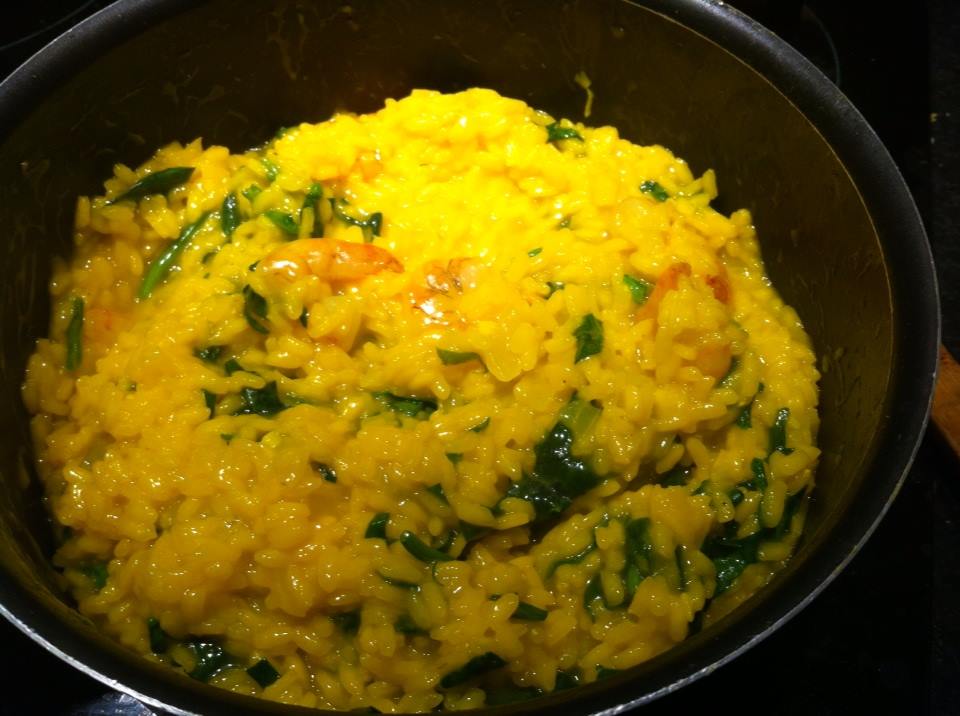
Fish, Prawn and Spinach Risotto

Cooking ‘ethnic’!

Image


Possibly one of the only true benefits of waves of emigration which afflict this country is the fact that taste buds change. Demands for ‘foreign’ food increases and with that ingredients for more ethnic-styled cooking become increasingly available.

When I was little, Chinese restaurants (not take-aways) were off the scale when it came to being exotic! There were take-aways but these were the strongholds of Italians. The main places available for dinner, rather than High Tea, were restaurants in hotels.

Indian restaurants tried and seemed to fail in the 1970s. And it is hardly surprising. In the shops was easi cook rice and a strange concoction in a tin called ‘Curry Powder’ – it smelt like curry but it sure as heck didn’t taste like it. Often added to a roux with some chopped apple, raisins and chunks of cooked chicken, this was sent out as ‘Curry’. Another alternative was Vesta dried dishes which were surprisingly tastier than other homemade efforts because at least, they contained a little kick.

 Again my memories might seem fanciful but picture this. Mustard came in two varieties – English and French and both were made by Colmans (and we had only recently graduated from mustard powder which had to be mixed). Salad cream was the norm and mayonaise was the stuff of American movies. White pepper was the only variety available so when my father bought his first black pepper mill, we discovered his sister unscrewing it and looking aghast as all these tiny black balls rolled out all over her Christmas dinner.

Ethnic cooking is now a regular activity for many. As a home cook, however, I am aware that having the ingredients does not a replica dish make. I can make a version, a very tasty version, but I would never suggest it is completely acceptable to someone from that region. The taste of the ingredients may differ. The age of the ingredients may differ if they are imported. And the way I season or add spice is generally adapted to our palates. The dish is near the original but not exact. For me, cooking ethnic does not mean cooking authentic cuisine – but I do try!

With this precursor, I can now say the Teen loves Italian food since she was a tot. I always remember her first taste of lasagne – she ate it pensively, then sidled up beside my dinner and declared ‘MORE!’ She enjoyed slices of Italian salami and Parma ham when other tots were gobbling up Monster Munch.

While studying in Florence last Summer, she regaled me with tales of what she could buy at the market – fresh pastas, ragu sauces made from Boar, beautiful cheese sauces, salads, etc. and for a fraction of what is paid here. I was entralled but now nervous that my Italian-styled offerings no longer made the grade for her. I shouldn’t have worried as she still loves my risotto (phew!). It remains a firm favourite in our ‘Comfort Food’ menu.


Prawn and Spinach Risotto
(serves 4)

Ingredients
14 ounces frozen Tiger Prawns (thoroughly defrosted as per instructions on pack)
10 ounces Arborio rice
2 ounces butter
Dash of olive oil
A good pinch of saffron strands
Hot water
Medium sized onion, chopped finely
1 clove of garlic, chopped finely
1 glass of white wine
1 litre of fish stock
Bag of baby spinach, washed with stems removed and leaves shredded
Salt and pepper
Lemon juice (optional)

Method
1. Put the strands of saffron into a little hot water to infuse
2. Heat stock in a pot
3. In another saucepan, melt the butter and add the olive oil to stop the butter burning
4. Add the finely minced onion and cook until soft in the melted butter
5. Add the finely minced garlic and cook
6. Add the rice and coat it completely with the onion and garlic mix
7. Cook for a minute or two
8. Add the glass of wine and stir in until evaporated
9. Add in the saffon water and stir until it is completely combined
10. Add a ladle of stock and cook until evaporated
11. Keep adding ladles of stock and cooking until evaporated and all the stock is used
12. When complete, season with salt and freshly ground black pepper
13. Add the prawns and cook gently until just cooked
14. Add in the spinach
15. Take off the heat and leave covered for about 5 minutes
16. Add a dash lemon juice, if desired

Standard
Family Stories and Food, Seasonal Food and Generational Gaps

Understanding Seasonal Food can be a Generational Thing

As I head towards fifty, I see myself as quite modern and up-to-date. When I discuss food with the Teen, however, it is a stark reminder of how different our worlds really are.

She thinks I am mad when I describe how fruit and vegetables were seasonal – if they weren’t in season, they were simply unavailable. She looks at the array of fruit and vegetables in the supermarket and cannot understand this seasonal thing at all. Root vegetables were available in the colder months and salad ingredients only available in the summer. I even remember a sliced pan called ‘Salad Days’ appearing only in the Summer months which was thinly sliced especially for cucumber sandwiches. I remember looking forward to new potatoes when we could eat the delicious spuds with their skins on. A special treat was when Dad would pick up a punnet of strawberries in June when he drove home from work. The teen thinks I am making this all up but it seems perfectly natural to me!

The teen thinks it odd that certain days often meant certain foods. In our home, there was a roast on Sunday, a stew on Monday, fish on Friday and boiled ham, bacon or corned beef on Saturday. Tuesday and Thursday were not set but would never have veered far from this general theme.

When I tell the teen about the food my parents ate as a child, I could be describing someone from the 1800s so far is her experience from theirs. My parents were teens during the Second World War and being in Ireland, food could be scarce rather than rationed. Dad was born and bred in Dublin but Mum was a country girl. From a farm, one might suspect that food was more plentiful but this was not so. She spent these years boarding in a Teachers’ Preparatory College, within sight of her own home and her tales of rancid butter and watered down milk were common.

Given what they ate as children, it is a miracle they grew up with any taste buds at all. Both my parents developed quite discerning palates and a love of fine food but the comfort food they often yearned for left me cold! My father, in particular, loved offal. While I had no problem preparing the dishes, my sense of adventure did not extend to eating them too. Stuffed lambs hearts, fried liver and onions and tripe cooked in milk and onions were among the favourites. ‘Crubeens’ (pig’s feet) were also on the list but he liked these served on newspaper, not plates. The stickiness from the meat and fat used to stick to the newspaper and my fingers would be grey with print but they were delicious.

When Mum was out, Dad would cook. He was a good cook when he stuck to things we liked but there were occasions when he couldn’t resist showing his penchant for boiling. He would boil mutton in water with a carrot, an onion, cabbage and season with salt and pepper. Eating this with boiled potatoes and big lumps of butter, he would savour the moment while we would look aghast at this tasteless plate of watery food with a lump of grey meat in the middle before we would push it away – far, far, away – from us. While he ate, he would tell us yet again how the greens should be nettles not cabbage. He would lament his inability to find good nettles since most were now sprayed with weed killer. We were thankful! We learned quickly and we learnt young that, if Mum was not making dinner, to convince Dad to take us out rather than risk a ‘boiled’ dinner.

Mum liked Ling. Returning from her home town in West Kerry, she would have a stash of locally grown Golden Wonder potatoes, meat from Patty Atty’s Butchers and a piece of salted, dry, Ling. As a member of the codling group, the piece of Ling was white but resembled shoe leather than fish. She would soak, cook and flake it – serving it with white sauce, boiled potatoes and cauliflower – her favourite ‘white dinner’. It was palatable but like Dad’s boiled dinners, we preferred to pass on this one too.

It was not all bland and boiled. Dad imparted a love of food and a respect for quality ingredients. In particular, he believed that food was part of the travelling experience and introduced us to delicacies in all countries we visited. He never told us what it was until we had tasted it – we did not have to like it but we did have to taste it. With this approach, we came to love many of the foods he enjoyed – albeit not all. Eggs made bright orange by frying them in the oil of chorizo was one that I passed on plus his love for fresh oysters (I did come to love the cooked variety though).

And from my mother, I inherited her passion for cooking and recipes shared from her sister and mother. My grandmother’s recipe for Irish Stew is one of the tastiest, simplest and purest dishes I have ever made and due to its low cost, has become a favourite with many pals at home and abroad. Her recipe for Pot Roast is top of my ‘Comfort Food’ list. The aroma and taste of stews and roasts bring with them memories of my childhood and people now passed. Teaching me the skills she learnt or inherited gave me a firm basis to move onto making foods from other cultures. Due the availability of more ingredients and more fluidity of seasons, my repertoire of dishes is wider but not better. In amongst the Goulashes and Thai Curries are Shepard’s Pie and roast chicken dinners. I have passed on these to my daughter. I simply cannot imagine cooking for the week without one of Mum’s dishes popping up. Alas, Dad’s favourites are not expected to make an appearance any time soon…


Standard
Baking and stuff, Jewish Orange and Almond Cake, Uncategorized

The Love-Hate Cake

1479417_10202552057460632_112988140_n


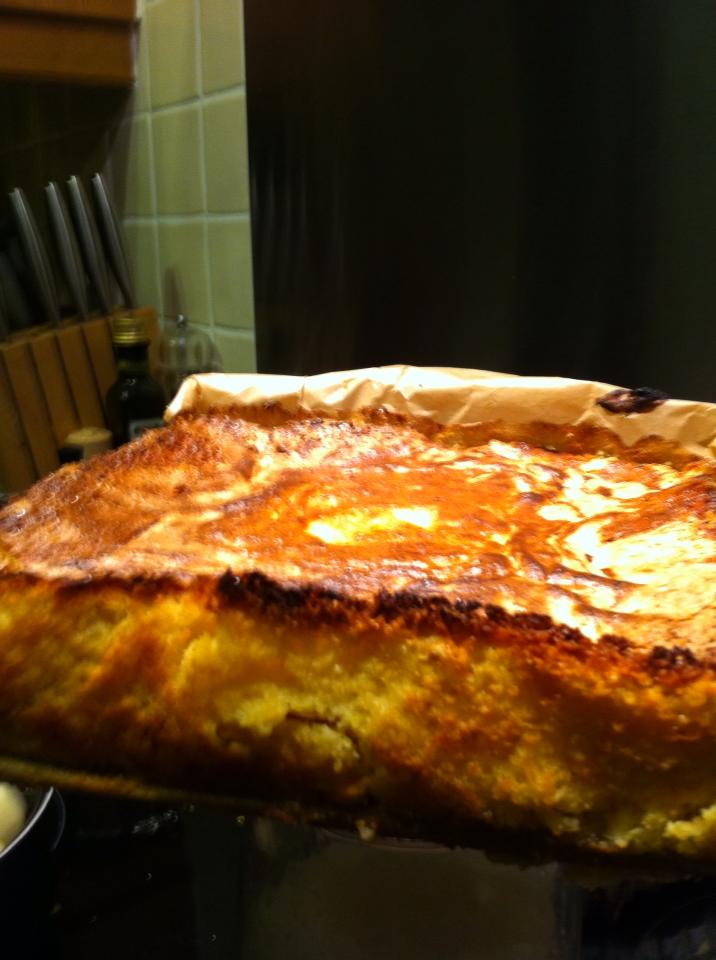
I love oranges – always have, always will. Unfortunately, that does not extend to marmalade which is a taste I cannot endure in any shape or form. The Teen, however, loves it – created by an early affinity with Jaffa Cakes. This cake therefore appeals to some palates but alas, not all.

This is a cake of many dimensions. It is a cake for marmalade lovers as it has an intense orangey taste. It is a flour free/gluten free cake. Although I cannot taste the final product, it is also a cake I enjoy making – particularly, the aroma of orange that wafts through the house as the oranges are cooking.

Where did I find this? I have been asked this question on a number of occasions. In 2000,  I was carrying out research for a client on old newspapers. I found this in an edition of The Irish Press from the 1950s and couldn’t resist jotting it down.

Jewish Orange and Almond Cake

Ingredients
2 large oranges
6 eggs
9 ounces castor sugar
1 teaspoon baking powder
9 ounces of ground almonds

Method
1. Gently boil the two oranges for about two hours
2. Cool and pulp
3. Blend the eggs, sugar and baking powder until light, thick and pale
4. Add the ground almonds
5. Add the pulped orange
6. Turn into a cake tin
7. Bake in a non-Fan oven at 190 for about one hour. The cake is baked when a skewer inserted into the centre of the cake comes away clean.

Standard
Baking and stuff, Orange Drizzle Cake

Necessity is indeed the Mother of Invention…

Image

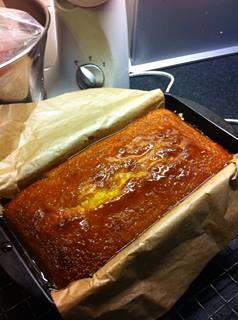
I get a phone call and I am still in my PJs. Saturday and my lovely pals, Laura and David, are on their way over with a gift. I’m the type of gal who can’t take without reciprocating. I have an hour… I know what. I’ll bake them a cake to take home. Problem is, I have ingredients for a madeira cake but little else. There are a handful of oranges in the bowl. Eureka! I’ll make an Orange Drizzle Cake.

I set to work and tasting along the way, it all seems fine. It is baking so when my pals arrive, they are greeted with the aroma of sweet cake. I take it out of the oven, add the warm orange syrup and let cool. They seem delighted and text later to say it’s a hit!

While I love the zing of lemons, this really is a worthwhile alternative. I add the juice of half an orange to the zest, let it sit before adding to the cake mix because I like a more, intense, orangey flavour. As with all cakes and food, it is simply a case of matching your food to your palate…

Orange drizzle cake

Ingredients

Cake
4 large eggs, beaten
8 ounces unsalted butter
8 ounces self-raising flour, sifted
8 ounces castor sugar
Zest of one orange
Juice of half orange or a teaspoon of orange essence (optional)

Syrup
3.5 ounces of icing sugar
Juice of one orange

Method
1. Pre-heat oven to 180 C
2. Prepare a loaf tin by lining with greaseproof paper (tin should be about 8 x 21 cm)
3. Blend the butter and sugar until pale
4. Add in the beaten eggs, a bit at a time, combining as you go
5. Add in the flour in three stages
6. Add in the zest of the orange
7. Add in the juice or essence
8. When combined, fold into the tin and level out the top
9. Bake in the centre of the oven for 45-50 minutes (the cake is done when the skewer comes away clean and the cake is pulling away from the sides of the tin)
10. As the cake is cooling, melt the icing sugar with the orange juice over a low heat until it becomes a syrup
11. Pierce the top of the warm cake with the skewer randomly
12. Pour over the warm syrup onto the cake
13. Let the cake cool in the tin
14. Serve with cream and raspberries or simply a big mug of coffee!

** See here for Lime Drizzle Cake: https://teeninattic.com/2018/12/13/lime-drizzle-cake/

Standard
Baking and stuff, Texas Chocolate Slab Cake

What to bring? What to bring? The question asked every Christmas!

Image

We’re building up to the Christmas season here. At this time of year, we all come together to eat dinner with one another. I am blessed to have an amazing family who the Teen and I delight in spending the day with.

The food will be spectacular as everyone brings their contribution. There will be the usual amount of desserts – about 10! My cousin’s husband particularly enjoys chocolate cake. Last year, I made my Chocolate Fudge cake which kept him happy for a few days. He likes to microwave it, douse it in custard and devour! The Teen thinks that is too much effort and eats her’s unadorned.

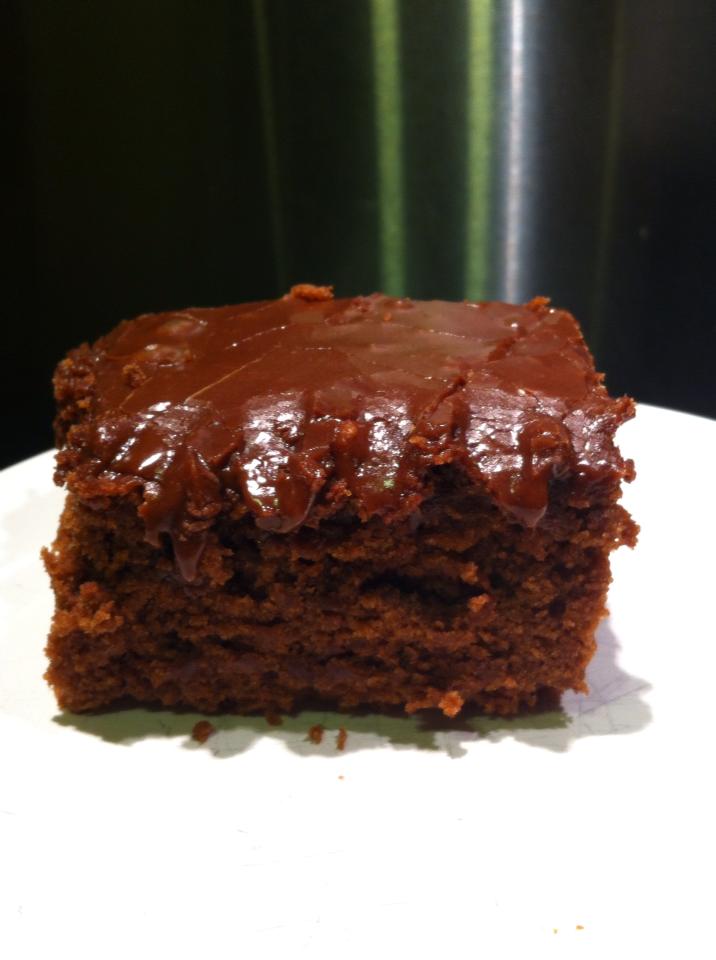
This year, I am making a Texas Chocolate Slab Cake. Years ago, I saw my pal, Brid, make this. I never got to sample it as the cat decided that the warm cake was a perfect place to sleep as the tray lay cooling on top of the refrigerator. I left with the recipe but no idea of the taste as I declined a piece of fur covered chocolate cake.

Eventually, I tried this recipe and it wowed on a number of levels. It is a big cake – and I mean BIG! I cut it into about 15 good sized portions. It is a deceptively rich cake so it has a hint of decadence. It is a surprisingly moist cake, tasting even better the next day. And, with the different processes, I actually had time to complete the washing-up while, for example, the butter and milk mixture was melting! What a welcome occasion, to finish a cake and not have to face into a sink full of pots and bowls – Bliss!


Texas Chocolate Slab Cake

Ingredients

Sponge
4 fluid ounces buttermilk
2 large eggs
1lb castor sugar
1lb plain flour
1 teaspoon baking powder
½ teaspoon salt
8 ounces unsalted butter or margarine
2 tablespoons oil (vegetable or sunflower)
8 fluid ounces water
6 tablespoons cocoa powder (not drinking chocolate)
1 teaspoon vanilla essence

Icing
4 ounces unsalted butter
6 tablespoons milk
4 tablespoons cocoa powder (not drinking chocolate)
1lb icing sugar, sifted
8 ounces toasted pecan nuts, chopped (optional)

Method
1. Pre-heat oven to 170 degrees (non-fan assisted)
2. Grease a deep tin or line with baking parchment/greaseproof paper (about 9” x 12”)
3. Into a large bowl, place sugar, flour, baking powder, salt and mix together until fully combined.
4. Make a well in the centre of the dry ingredients
5. Whisk the eggs and buttermilk together and leave aside*
6. In a saucepan, gently melt the butter, oil and water. Bring up to boiling point but do not let boil
7. Remove from the heat. Using a small whisk, mix in the cocoa powder until completely combined
8. Add in the vanilla essence
9. Add this mixture to the dry ingredients and mix thoroughly
10. Add in the milk and egg mix and stir well.
11. Pour this into the pan
12. Bake at the centre of the oven for 30-35 minutes
13. When the cake is nearly ready, make the frosting as it cannot be allowed to set. (Test the cake to make sure it is nearly baked before making the icing)
14. In a saucepan, melt the butter and milk. Bring up to boiling point but do not let boil
15. Remove from heat and using a small whisk, mix in the cocoa powder until completely combined
16. Whisk in icing sugar gently to make sure there are no lumps. As it thickens, use a wooden spoon. If it thickens too quickly, return to the heat and stir continuously (gently) until it becomes less thick. If necessary, add a little milk to thin it out
17. Mix icing until it is shiny
18. Remove sponge from oven. It is cooked when pierced with a skewer and it comes away clean
19. Pierce the sponge all over
20. Quickly spread the icing all over the hot sponge, using a spatula to ensure it is evenly distributed
21. If including pecan nuts, sprinkle over the cake at this point
22. Leave the cake to cool completely in the tin before slicing (but it is rather decadent when still a little warm!)**
23. It is perfect to make the day before.

* A small hand-held whisk should be used. An electric whisk should not be used, especially for the hot liquids.

** If being this naughty, suggest some unsweetened whipped cream or a quenelle of vanilla ice cream.

Standard
Soups, Tomato and Basil

Soupy winter weather leads to a yearning for…eh…soup!

The teen loves soup – all colours, textures and varieties. Here is another point at which we differ. I have an aversion to ‘sameness’ – I have to have variety on my plate so I steer clear of bowls of pasta or soup. Conversely, the teen loves these and would happily live out her days feasting on pasta and eating her soup.

When she was at school, I always encouraged her to bring soup as it is a slow-energy releasing food which helps the learning process. These days, the college going teen tells me it is an important/urgent necessity for her studying process in a ploy to get me to make her soup.

Always making my own, however, I think I spoilt her from an early age. Now she turns her nose up at any shop bought preparations, packets or tins which could make my life a tad bit easier! While some soups take time to make, there are a few firm favourites which can be whipped up quickly. Here is one of the teen’s all-time favourites.

Tomato and Basil Soup

This recipe is a quick and easy way to prepare soup. The vegetables do not have to be cut neatly or precisely as the whole lot gets chucked into a blender before serving. I often throw in some softened tomatoes but always use fresh basil as the dried variety just does not pack the same punch.

Ingredients
1 medium sized onion, chopped
1-2 cloves of garlic, chopped (how much you add depends on your own taste preference)
2 carrots, chopped in small pieces
2 tablespoons extra virgin olive oil
2 tins of tomatoes, chopped or about 1lb fresh tomatoes, chopped
1½ pints stock (vegetable)
Handful of fresh, washed, basil leaves
Salt
Sugar
Freshly ground black pepper

Method
1. Heat the oil
2. Add the onions and fry until soft
3. Add the garlic and cook
4. Add the carrots and cook for a few minutes
5. Add the stock and tomatoes
6. Bring to the boil and let simmer for about 10 minutes
7. Season with salt and pepper (I leave out the salt if using a shop bought stock)
8. Add sugar to taste (starting with one teaspoonful) as this brings out the taste of the tomatoes
9. Place in a liquidiser. Add the fresh basil leaves and blitz (the teen likes it with a bit of texture and not completely smooth)
10. Return to the saucepan and ensure it is heated thoroughly before serving
11. Serve with crusty bread or if you are studying, a large mug and spoon!

Copyright © 2013 · All Rights Reserved ·

Standard