Stuff and Nonsense, The Cooked Breakfast

Ah…the Cooked Breakfast…

Screenshot_2015-03-01-17-13-08-1

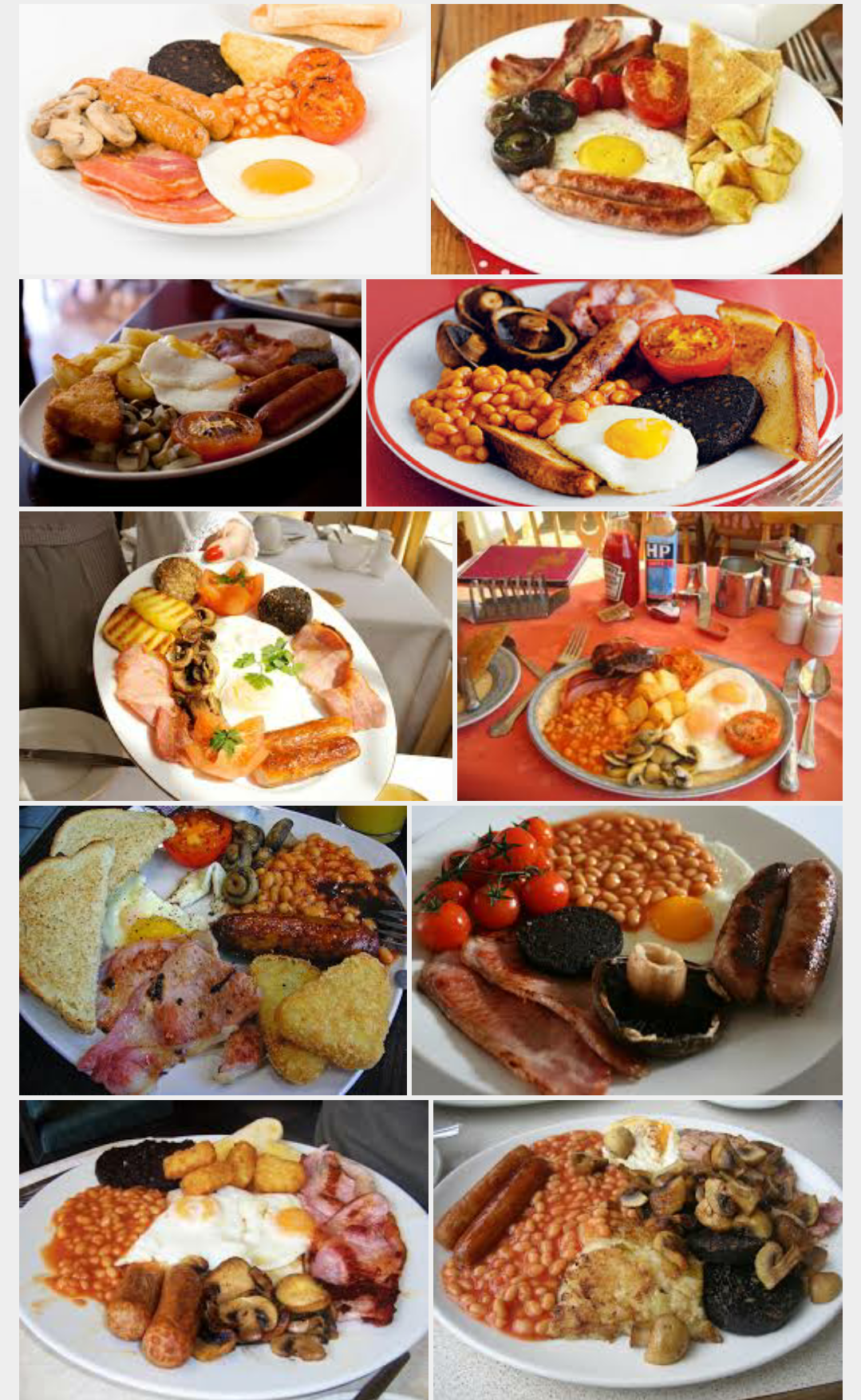
The very words conjure up memories of delicious cooking smells wafting from the kitchen to make taste buds explode and then salivate. The sizzle of the sausage, the crisping of the bacon, the popping of the toast…it’s all there. A rare treat in some houses, a daily occurrence in others – whichever it is, the Cooked Breakfast is a treasured institution in Ireland, the United Kingdom and beyond.

In our home, the Cooked Breakfast is an occasional weekend treat. The essential ingredients, apart from what is served on the plate, are oodles of Sunday newspapers and pots of freshly brewed coffee. Simply bliss! But where did this notion of cooking breakfast come from? Who decided to put all these ingredients together and serve them as breakfast fare?

That would be Mrs Isabella Beeton. In her 1861 Book of Household Management, she provided a list of items which could be cooked and served at a Breakfast Buffet – from bacon and eggs to broiled fish to devilled kidneys to kippers and of course, Kedgeree to name but a few. Such a spread was the delicious delicacies of royalty and gentry – something minions could merely dream of.

It wasn’t until the period after World War Two that the joy of a Cooked Breakfast truly extended to the masses. With the growing popularity of tourism, bacon and its accompaniments became standard fare in guesthouses the length and breadth of the country. Not limited simply to Ireland and the United Kingdom – its popularity quickly spread to countries where Anglo influence is felt – Canada, Australia, New Zealand and the US.

Calling it a ‘Cooked Breakfast’ is rather a description than the true name. It has others – the Full Breakfast, the All-Day Breakfast, the Full Monty and the good old Fry Up. Whichever name used, expectations of what ends up on the plate, however, differ by region.

In the traditional breakfast, there are ingredients common to all. Back bacon, a couple of fried eggs and sausages, flavoured with either brown sauce or tomato ketchup, accompanied by some type of bread and all washed down with anything from instant coffee to freshly brewed coffee to tea in a dainty china cup to a whopping great mug of Builder’s Tea. The addition of cooked tomato, baked beans and mushrooms came later. There is still some contention about whether or not they truly belong but as the saying goes, ‘the proof of the pudding is in the eating…’

So that’s the common ground. Each region has its added extras. In England, fried bread may make an appearance while freshly cooked tomatoes may be swapped in certain parts for their poor relation – the tinned variety. In Ireland, both black and white pudding will join the others on the plate. In Scotland, white pudding may also feature alongside Lorne Sausage and Haggis. The great Ulster Fry, so revered it was voted most popular regional dish, includes potato bread dripping with butter and fried bread. This is not the white bread of the English fried variety but often a soda farl, snipped in two and cooked in the same fat as the meal (the farl is known as a ‘fadge’ in certain areas of Northern Ireland). In this litany of added extras, it is the Welsh version which stands out as truly unique. Often including Laverbread or ‘bara lawr’ (seaweed puree mixed with oatmeal and fried), bacon and eggs can also be accompanied by cockles for a true ‘surf’ and ‘turf’ combination.

Whatever variety chosen, a Cooked Breakfast is truly magical. It can act like a giant hug after a late night out on the tiles. It can provide sustenance and soakage. It can form the basis of a meal with family and friends. Or simply, it can ooze nostalgia by placing you back in the kitchen of a loved one. Not many dishes score on all these fronts.

What then of the beloved Breakfast Roll? A full cooked breakfast served in a crusted roll – available from a petrol station and convenience store near you. Legend has it that, as the Irish economy boomed, people had to move further and further from the city centre to find affordable housing. They came early to beat the traffic and to find free parking, often sleeping in their cars for the last hour or two. The Breakfast Roll was created to provide sustenance to such early travellers who would happily munch them on the way into work. As the economy plummeted, so too did sales of the beloved Breakfast Roll. Forget the economists and other fiscal expects. It is now possible to assess economic fluctuations by the number of cranes present on the skyline and the rise and fall of sales of the Breakfast Roll. Who knew?

Traditional ingredients in the Cooked Breakfast are now being changed around to adapt to different tastes. Eggs may no longer be fried but poached, baked, scrambled. Bacon can be back, streaky, smoked or green. And sausages can be pork or beef. Pudding? Well, it’s always best not to ask about pudding – delicious until you know what it’s made of. Arguments are rife too – should eggs be ‘sunny side up’ or ‘over easy’? Should bacon be cooked perfectly or cremated to within a millimetre of disintegration? Should baked beans feature or be banished? Resolving those heady issues can be part of the fun of eating with friends.

The rise in health consciousness impacts on the traditional breakfast and the way it is prepared. Instead of being fried in stages in the same grease and pan, parts are now reduced in fat content in their production and/or by grilling them separately. Lard and butter are often replaced by lighter, healthier, oils such as olive and sunflower. Fried bread is often displaced by wads of brown soda bread or freshly made toast. All this combines not only to slightly change the taste of the finished dish but also to relieve much of the guilt previously associated with it.

But the Cooked Breakfast is here to stay. Evolving cooking methods are not the only indicator but producing individual ingredients is big business. Alongside traditional brands are now gourmet sausages, handmade puddings, dry cured bacon… Brown soda bread and white toast comfortably sit beside spelt and gluten-free alternatives. Organic vegetables and free range eggs now displace cheaper varieties.

Changing cooking methods and increasing quality of food stuffs mean that people are determined to keep the Cooked Breakfast for many years to come. Whatever the region, this simple dish is treasured.
Standard
Great British Bake Off, Stuff and Nonsense

Oooooh, come in GBBO. We’ve been expecting you….

The Grand Prix of Baking is back on our screens and with its arrival is the simultaneous depletion of sugar, flour and icing funnels in every shop throughout the British Isles. The Great British Bake Off – affectionately referred to as GBBO – has taken baking to a new, delicious, level and its spectators to a whole new stratosphere.


With a flurry of flour, a blast of baking powder, a smidgen of suet and a whirl of a whisk, it has sashayed from its spot on BBC2 to prime time viewing on BBC1. And deserving of this place it is. Now in its fifth series, its popularity continues to rise and rise to soufflé proportions with the finals last year attracting a staggering 9.1 million viewers. Out-peaking its nearest rival, Top Gear, in the rating stakes, its formula has been bought by over fourteen countries so we are not the only ones who flock to it like bees to a Honey Cake.


What is it about the GBBO that makes us hit Sky+ every time we hear a new series is on its way? It’s tame – twelve people stand in a tent and…eh…bake or kneel in front of ovens as we look on. It’s gentile. It’s nice. The people are like us. Nice. On paper, it doesn’t sound like a winning recipe.


Across the pond, baking at a competitive level is a mean sport. Compared to its American counterparts, the GBBO doesn’t carry any of that grit or vigour. With Ultimate Cake Off, size really does matter with bakers competing to create cakes over 5ft tall which carry oodles and oodles of pounds in weight. They concentrate on aspects of technical difficulty, aesthetic appeal and tripping up their competitors by knocking them out for 30 minute segments. Taste figures in there too – just – but more attention is placed on girth than mirth as these bakers do battle. Like other American baking programmes, it may look like a kitchen but act like a hardware store when a range of tools is thrown in the mix. For its finale, Cup Cake Wars expects 1,000 cup cakes of different varieties prepared in two hours. Competing teams are allowed assistants and…eh…a carpenter… Blow torches, belt sanders, power saws – the possibilities are endless as are the ingredients where basil and oysters can sidle their way in under the heady challenge of ‘Aphrodisiac Cup Cakes’ for a match-making party.


Back to the comparative tranquillity and twee-ness that is the GBBO. Idyllically set in the garden of a Country House, nestled under cover of a marquee on a warm summer’s day with a set which looks like an explosion in a Cath Kidston factory. It’s difficult to get more quintessentially English than this. But don’t be fooled! It may lack the physicality of the American programmes but GBBO is a battle of wills, striving for perfection over erection. A mouth twisted in a wasp sucking gesture, Mary Berry can floor contestants with one look as quickly as she can raise them up with an exclamation of ‘positively scrumptious.’ Swaggering over, hands in jeans’ pockets, Paul Hollywood can ask a pointed question so sharp it deflates confidence – instantly. And in between the cookers and counters skip Sue Perkins and Mel Giedroyc spitting out puns quicker than bakers bake buns and throwing in every sexual innuendo conceivable.


The bakers bake. They fret. They sweat. They create with one eye on beating their new found baking buddies and the other on creaming butter, eggs and sugar. Age or experience is not a factor here; it is how smooth you can get your Crème Pat that really matters.


Skills present in one round can instantly evaporate in the next. Mary and Paul judge masterpieces while then looking on in horror as bread is plaited into creations that could terrify even Tim Burton. As bakers hurdle the Technical Challenge, surmount the Signature Bake and wow with the Showstopper, personalities start to ooze to the surface. Who can forget doe-eyed Ruby of the quivering lip or Brendan the Buddhist Baker?


We sit in our homes, barking at the bakers in our telly-box to whip, beat, cream with all the aggression of well-seasoned sports pundits. We tell them the ingredients to use and despair when they pick Genoese sponge over traditional Madeira because how could they not know it will sink under the weight of all that lavender icing? We are shocked at any foul play and demand that custard thieves be spat out immediately. And we watch, aghast, heads buried behind cushions, as a procession of soggy bottoms make their way to the Judging Table.


This is serious business. As we sit glued to the challenges, teenage daughters and sons replicate the masterpieces in our kitchens while the ranks of the Women’s Institute swell to unprecedented proportions. We watch in our millions, the rise and fall of egos and sponges and when we are surprised by the choice of ultimate winner, remark with sheer, unprecedented, delight – ‘Oh, my giddy, giddy, aunt!’


Standard
Baking and stuff, Baking and the Delights of Being a Researcher, Dark Chocolate Cake, Stuff and Nonsense

Baking and the Delights of Being a Researcher…

Through the years, I have worked on quite an array of projects and campaigns. In the late 1990s, I spent many months in a darkened room, flicking through decades of Irish newspapers stored on Microfiche. Ah, those were the days when researcher-friendly technology had yet to arrive – working through pages so awkwardly photographed that you stand on your head and still be unable to read them!

While I scoured the paper for gruesome information to prepare a client for the Tobacco Trials, I did so in-between hordes of Americans looking through Church Records for their Irish ancestors. The Librarian’s knuckles would whiten as he gripped the Information Desk, listening to yet another visitor reveal enthusiastically how their great, great, great grandfather came from ‘Ire-land’ and while they didn’t know the county, they were sure the surname was ‘Murphy’.

As they searched the records, their roars cracked the expected silence of the library and their delight met with scowls from the rest of us. One group was particularly raucous. I was about to lean over to ask them to pipe down until I spotted what they were looking at – my own family tree. Not being in the mood to reclaim lost relatives, I returned to my work and simply carried on…

Spending up to seven hours a day looking at Microfiche, my mind would take to wandering. I delighted in reading ads for jobs clearly stating a higher rate of pay for men over women doing the same job. I read reports of police searches for the spy, Guy Burgess, while I knew from history he was already in Russia by this time. As I covered year after year of newspapers, I was particularly stunned to learn of the overwhelming popularity of an entertainer called the “Chocolate Covered Coon” – a name which now makes the Black and White Minstrels seem almost respectable.[1] I would emerge at the end of the day into daylight: notebooks full, copies ordered with bleary eyes and a mindful of facts which were alarmingly out-of-date if I bumped into a pal who asked the inevitable question “Any news?”


I scanned through the Women’s pages too and collected recipes from bygone years. I found this one in The Irish Press of 3 May, 1962 and tried it out on the teen. It’s low flour content and deep chocolate flavour met with instant approval even if it was pronounced ‘very rich.’


Ingredients
3 eggs, separated
4 ounces of bitter, dark, chocolate*
4 ounces unsalted butter
4 ounces castor sugar
2 ounces ground almonds
1.5 ounces plain flour

*It is essential to use bitter, dark, chocolate in this cake

Method
1. Beat the butter and sugar until it is pale
2. Melt the chocolate in a bowl over a pan of water
3. When melted, allow it to cool down
4. Whip the egg whites until stiff and set aside
5. Combine thoroughly the butter and sugar mixture with the chocolate, almonds, flour and yolks of the eggs
6. Fold in the stiff whisked egg whites
7. Place the mixture into one greased sandwich tin
8. Cook in a non-Fan oven at 180 for about 45 minutes (place a little tin foil on top if cake top looks as if it is cooking too quickly)
9. Insert skewer into the centre to ensure the cake is cooked – if it comes out clean, it is
10. Cool on a wire rack
11. Serve with whipped cream.

[1] http://www.bigredbook.info/g_h_elliott.html

Standard
Baking and the Political Divide

Baking and the Political Divide

Dreary, soggy, dark, Winter’s evening and I arrive in one of my favourite cities, Belfast. I hop into a taxi and give the driver the address of where I am meeting my pal. Heels on the ground, I alight from the car, pay Mr. Cabbie and click-click-click my way into the cafe where we are meeting.

We greet and launch into chatter as we enjoy a long overdue catch-up. Steaming coffee is served and with hands wrapped around the mug in an attempt to channel heat to the rest of my body, I ask “So which part of the city am I in? Nationalist or Unionist?”

My pal laughs and tells me to guess. I rise to the challenge and within seconds I declare “Unionist!” Completely stunned, he asks how I knew. I quickly think of smart retorts – ‘divine intervention’ and the like. In the end, I point at the menu board hanging on the wall. “Easy”, says I. “They sell ‘Tray Bakes’! Standard fare at all Protestant Church Fetes. What your lot would call ‘slices’ or ‘squares’!”

So you can navigate a city by baking. Who knew?

Standard
Baking and stuff, Fairy Buns, Let's Hear it for Fairy Buns!

Let’s hear it for Fairy Buns!  

photo 2


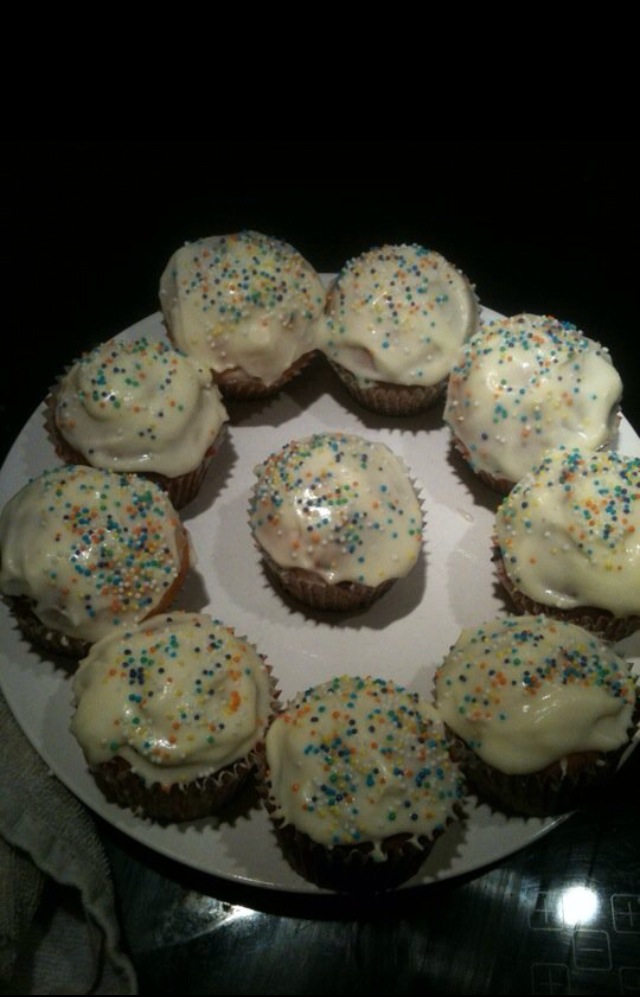
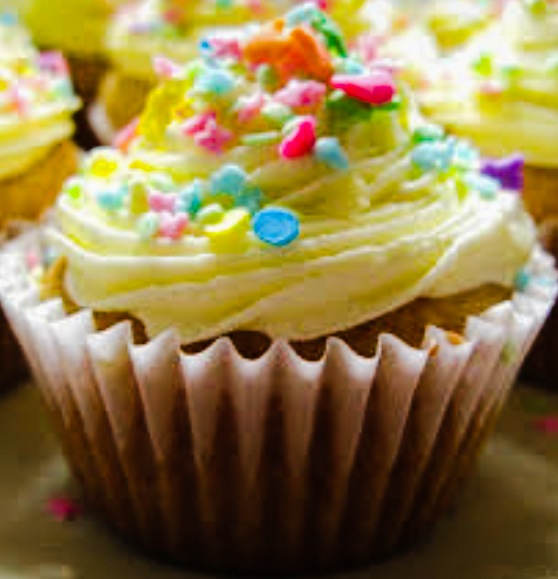
I blinked and suddenly the humble Fairy Bun was displaced by its glamorous American cousin, the Cup Cake. When I saw these first, I felt a tad bit intimidated as they were so stunningly iced and presented (and priced!). By comparison, the Fairy Bun looks ragged and home-made rather than designer conceived and created.

So what’s the difference? I googled each and found Fairy Buns defined as ‘a small individual sponge cake, usually with icing or other decoration.’ And Cup Cake? It was described as…‘a small cake designed for one person…’

 What of the recipe? I had a look at a number of versions for each. The basic recipes are very similar except for the repetitive addition of vanilla essence to the Cup Cake batter. So methinks it’s all in the individualisation and presentation.


photo 3


Ah – the humble Fairy Bun. It doesn’t matter what mix you use or how it is presented, it invariably looks homemade. Since the advent of the Cup Cake, however, it has been relegated to second place and eaten to extinction. Well, almost. I do encounter the odd ragged version at the Church Fete described ambitiously as a ‘Cup Cake’ but not at all in the same league.

Fairy Bun, Cup Cake – they are very different beasts. I am advocating the return of the Fairy Bun to centre stage and to the memory of so many people who made these with mums, daughters, sons, grandmothers in Irish kitchens throughout the world!

In this house, Fairy Buns reign supreme while the Cup Cake can visit – by appointment! For me, the Cup Cake can never displace the Fairy Bun as it carries none of the nostalgia. When I see the paper cake holders, I am back in my mother’s kitchen, sitting on the scruffy blue stool, watching her skilfully scoop cake mix off the spoon into the paper case with her (clean) little finger without upsetting the holder. And while they baked, there would be the ceremonial cleaning of the bowl and spoon – first by human tongue and then washing-up liquid and hot water. Serious discussion on presentation and filling would follow. Yes, the decorating stage would be messing, it would be ruthless but the end result was ours. The Teen and I share similar memories but I must admit that her skill in Fairy Bun making and decorating now surpasses mine.

With my mum, we made the basic recipe but often jazzed it up. We might add chocolate drinking powder to all the mix or on occasions to half the mix. Doing this meant we could make marbled sponge with a rather yummy two tone flavour. As a child, I loved experimenting with a variety of food colourings to create more marbled effects but, being heavy handed with the bottle, often ended up with navy blue or scarlet red sponge. Worse still, the end product might resemble coloured ‘Marla’ all rolled in together.[1]

Here’s the basic recipe used in this kitchens of this family with a few samples of how we dice and ice them.


Basic recipe
(makes 6-8)
Ingredients
2 ounces margarine or unsalted butter, softened
2 ounces castor sugar
1 egg
3 ounces of self-raising flour, sifted

Method
1. Heat the oven at 190F.
2. Prepare a muffin tin with paper cake cases.
3. Blend the butter and sugar together until pale.
4. Beat the egg and add in stages to butter/sugar mix until combined.
5. Fold in the sifted flour with a metal spoon – in three stages.
6. Put about a dessert spoon of mixture into each case.
7. Bake in the middle of the oven for 10 minutes or until risen.
8. Insert a skewer into the bun and if it comes away clean, the bun is cooked.
9. When baked, stand upright and cool on a wire rack.


Chocolate
Sometimes we take out a tablespoon of flour and replace it with a tablespoon of Cocoa or drinking chocolate (the Teen always throws in a tad bit more believing chocolate heals all ailments!).

Marbled
Feeling a tad bit more creative, I make double the mixture. In one bowl, I add food colouring or drinking chocolate. Putting alternative spoons from each bowl, I fill up each cake case. When baked, these have a lovely mottled effect and/or a cross of flavours.

Chocolate butter icing
This house agrees that the best way to serve chocolate Fairy Buns is covered in chocolate butter icing. I make this by combining into a smooth paste 2 ounces of sifted icing sugar, 1 ounce of butter, 1/2 ounce of drinking chocolate and one tablespoon of cold milk. Spread the mix lavishly all over the top of freshly baked buns. The Teen often skips this stage, preferring to slather the buns in Nutella!

Butterfly (traditional or chocolate)
If the above sound very conservative, you can simply decapitate the humble Fairy Bun! Take the piece and carefully cut in half. The traditional version adds a small spoonful of raspberry jam and then a small spoonful of slightly sweetened, fresh whipped cream on top before replacing the cut pieces. These should be positioned at angles to give the look of butterfly wings.

We have also been known to ditch the jam and cream, replacing it with chocolate butter icing or Nutella.

Jam and coconut
A personal favourite is warmed raspberry jam spread on the top. When coated, the bun is rolled on a plate of desiccated coconut until it is completely covered.

Nana Margaret’s
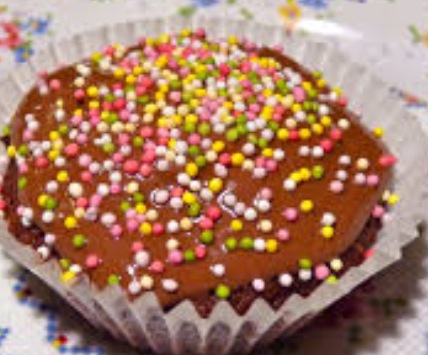
No discussion about Fairy Buns in our home would be complete without mentioning my aunt’s version. It is so delightful to see the reaction as she opens the cake tin when her grandchildren pop by. ‘Nana Margaret’s’ are the best – ever. She dips the top into melted chocolate and when cooling, adds coloured sprinkles over the top. Delightful and nostalgic – all contained in one cake case! Delish.


 photo (2)


[1] Mala/Marla is the Irish word for plastercine, a feature of Primary School classrooms.

Standard
Understanding Measurements

Measurements, measurements and more measurements…!

photo 1 (4)

I’m a child of the Sixties. Like many of my fellow Sixties babies, I had to learn not one but three currencies. After getting to terms with the fact that there were 220 pennies in a pound, I was told this was wrong and that there were in fact only 100. I’m fine with this but then am told there are no more pennies, only cents. Phew! I’m up to speed now and no longer feel the mad urge to ask ‘What’s that in old money?’

Measuring ingredients changed too but making that all-important transition from Imperial to Metric did not come easy. Ireland seemed to keep both which was a help and a hindrance. Enter in cookery books to muddle this further. I have my mother’s as well as my own so ounces and pounds are still the way most ingredients are measured in this house.

The Teen is a Metric person and delights in being able to calculate them for me as I hang my head and think ‘The shame, the shame…’ She tries to teach me but I revert to ounces every time. For me, a pound is manageable but 456 grams is daunting! Seems like the only way I am going to learn is to set it all out in a table and so, for the Metric-ly challenged like myself, I give you…


Imperial Metric
1 oz                 28g
2 oz                56g
3 oz                85g
4 oz               113g
5 oz               141g
6 oz               170g
7 oz               198g
8 oz               226g
16 oz (lb)    456g
2.2 lbs          1kg

So that’s the measurements. They also changed the heat!

Oven
Gas            Mark           Fahrenheit            Celsius Description
¼               225                  110                       Very cool/very slow
½               250                 130                        —
1                 275                  140                      Cool
2                 300                 150                       —
3                 325                  170                      Very moderate
4                 350                 180                       Moderate
5                 375                  190                       —
6                 400                 200                      Moderately hot
7                 425                 220                       Hot
8                 450                 230                       —
9                 475                 240                       Very hot


With all this detail, I will be able to cook anything from any era and with any appliance. I will be MasterChef in my own culinary universe! Mwahahahahaha!

Standard