Beef, Burgers, Burgers

We’re all about burgers

Screenshot_2015-03-13-16-57-47-1

It doesn’t matter how amazing food is or how sophisticated the dining experience, there are times when we simply crave burgers. Not the frozen variety but the homemade version. It’s not merely about the taste but the whole ensemble.

The wrapper has to be correct – whether it be bun, crusty roll, pitta bread or flatbread. The accompaniments must be just right too – assortment of salads and sauces. There has to be sauce as a burger is too dry without one!

We alternate between beef and lamb depending on what we fancy. The lamb burger is spicy and is best made in advance while the beef ones can be prepped and cooked at the same time.

Each recipe makes four large or six medium sized burgers.

Beef
Ingredients
1lb beef minced
1 medium onion, finely chopped
2 tablespoons parsley, finely chopped
1 teaspoon dried mixed herbs
1 cup breadcrumbs
1 large egg, beaten
Salt and ground black pepper
Sunflower oil for frying

Method
1. Mix all ingredients together until completely combined
2. Shape into four or six burgers
3. Heat the oil and place the burgers in the pan
4. Reduce heat and fry for 4-6 minutes on each side depending on preferences
5. Alternatively, these can be cooked in the oven by placing the burgers on a baking sheet. Place in a pre-heated oven at 180 degrees for 10-15 minutes depending on preference. There is no need to add oil
6. Serve immediately on a burger bun or crusty roll with salad (shredded lettuce, tomato, onion, carrot) or cheese with or without crispy bacon and sauces (ketchup, mayonaise, mayonaise mixed with curry powder or chilli jam or horseradish).


Lamb
Ingredients
1lb lamb, minced
1 medium onion, finely chopped
2 large garlic cloves, minced finely
1½ inch piece ginger, grated finely
1-2 green chillis, chopped finely (Cayenne Pepper can be used if necessary but it is best to use fresh chillis)
1½ cups bread crumbs
1 large egg, beaten
1½ tsp garam masala
1 tsp cumin
Salt and ground black pepper
Sunflower oil for frying

Method
1. Combine onion, garlic, ginger and chilli and blend into a rough paste
2. Add to the mince
3. Add breadcrumbs, garam masala, cumin, beaten egg, salt and pepper
4. Mix until all ingredients are completely combined
5. Refrigerate the mix for 30 minutes or until needed
6. Divide into four or six burgers
7. Heat the oil and place the burgers in the pan
8. Reduce heat and fry for 5 minutes on each side
9. Serve immediately on crusty rolls, flatbread or in pitta bread
10. Accompaniments can include salad (chopped tomatoes, lettuce, grated carrot, red onion), natural yoghurt (plain, herbed or raita), mayonnaise and/or chilli jam

Standard
Stuff and Nonsense, The Cooked Breakfast

Ah…the Cooked Breakfast…

Screenshot_2015-03-01-17-13-08-1

The very words conjure up memories of delicious cooking smells wafting from the kitchen to make taste buds explode and then salivate. The sizzle of the sausage, the crisping of the bacon, the popping of the toast…it’s all there. A rare treat in some houses, a daily occurrence in others – whichever it is, the Cooked Breakfast is a treasured institution in Ireland, the United Kingdom and beyond.

In our home, the Cooked Breakfast is an occasional weekend treat. The essential ingredients, apart from what is served on the plate, are oodles of Sunday newspapers and pots of freshly brewed coffee. Simply bliss! But where did this notion of cooking breakfast come from? Who decided to put all these ingredients together and serve them as breakfast fare?

That would be Mrs Isabella Beeton. In her 1861 Book of Household Management, she provided a list of items which could be cooked and served at a Breakfast Buffet – from bacon and eggs to broiled fish to devilled kidneys to kippers and of course, Kedgeree to name but a few. Such a spread was the delicious delicacies of royalty and gentry – something minions could merely dream of.

It wasn’t until the period after World War Two that the joy of a Cooked Breakfast truly extended to the masses. With the growing popularity of tourism, bacon and its accompaniments became standard fare in guesthouses the length and breadth of the country. Not limited simply to Ireland and the United Kingdom – its popularity quickly spread to countries where Anglo influence is felt – Canada, Australia, New Zealand and the US.

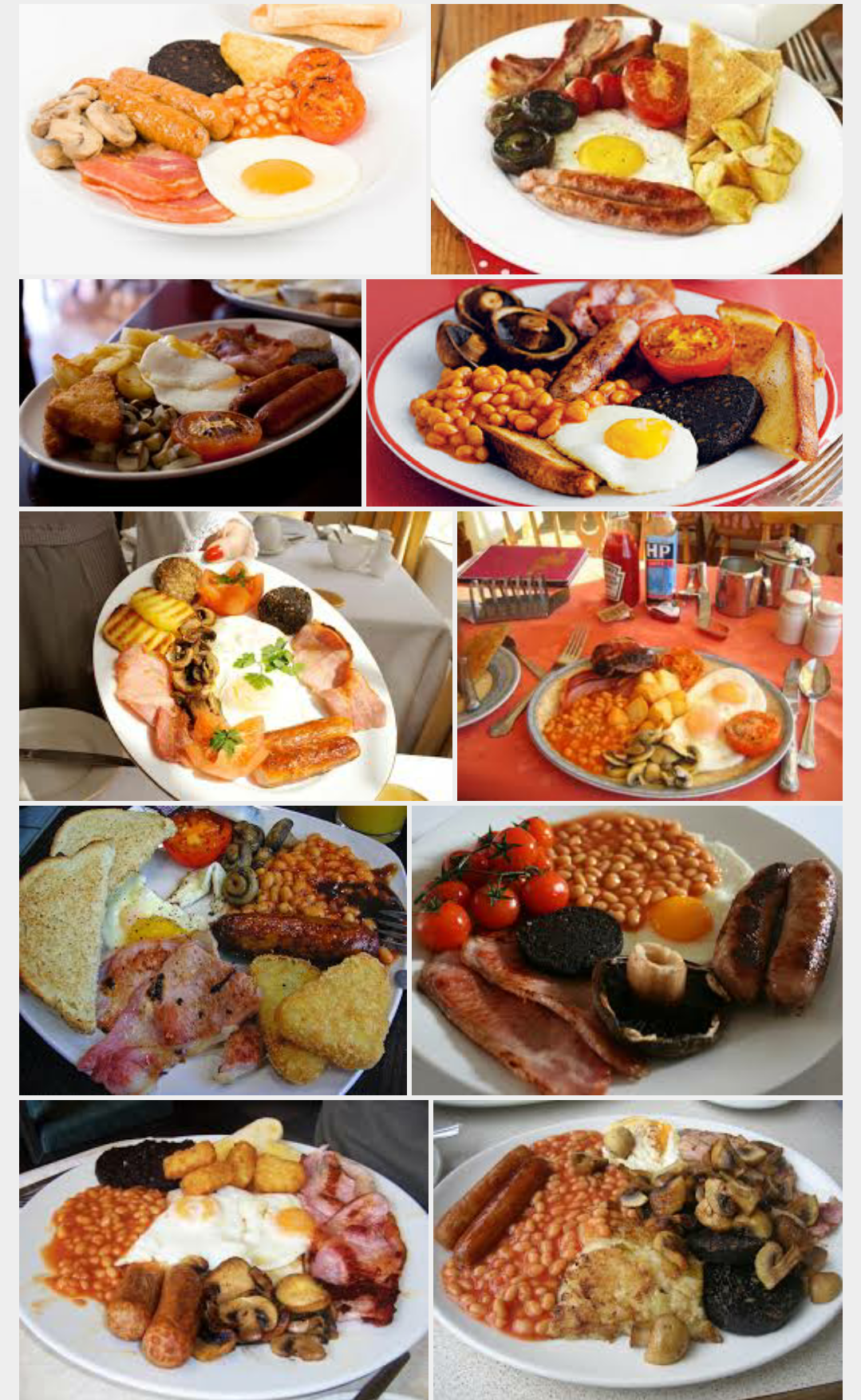
Calling it a ‘Cooked Breakfast’ is rather a description than the true name. It has others – the Full Breakfast, the All-Day Breakfast, the Full Monty and the good old Fry Up. Whichever name used, expectations of what ends up on the plate, however, differ by region.

In the traditional breakfast, there are ingredients common to all. Back bacon, a couple of fried eggs and sausages, flavoured with either brown sauce or tomato ketchup, accompanied by some type of bread and all washed down with anything from instant coffee to freshly brewed coffee to tea in a dainty china cup to a whopping great mug of Builder’s Tea. The addition of cooked tomato, baked beans and mushrooms came later. There is still some contention about whether or not they truly belong but as the saying goes, ‘the proof of the pudding is in the eating…’

So that’s the common ground. Each region has its added extras. In England, fried bread may make an appearance while freshly cooked tomatoes may be swapped in certain parts for their poor relation – the tinned variety. In Ireland, both black and white pudding will join the others on the plate. In Scotland, white pudding may also feature alongside Lorne Sausage and Haggis. The great Ulster Fry, so revered it was voted most popular regional dish, includes potato bread dripping with butter and fried bread. This is not the white bread of the English fried variety but often a soda farl, snipped in two and cooked in the same fat as the meal (the farl is known as a ‘fadge’ in certain areas of Northern Ireland). In this litany of added extras, it is the Welsh version which stands out as truly unique. Often including Laverbread or ‘bara lawr’ (seaweed puree mixed with oatmeal and fried), bacon and eggs can also be accompanied by cockles for a true ‘surf’ and ‘turf’ combination.

Whatever variety chosen, a Cooked Breakfast is truly magical. It can act like a giant hug after a late night out on the tiles. It can provide sustenance and soakage. It can form the basis of a meal with family and friends. Or simply, it can ooze nostalgia by placing you back in the kitchen of a loved one. Not many dishes score on all these fronts.

What then of the beloved Breakfast Roll? A full cooked breakfast served in a crusted roll – available from a petrol station and convenience store near you. Legend has it that, as the Irish economy boomed, people had to move further and further from the city centre to find affordable housing. They came early to beat the traffic and to find free parking, often sleeping in their cars for the last hour or two. The Breakfast Roll was created to provide sustenance to such early travellers who would happily munch them on the way into work. As the economy plummeted, so too did sales of the beloved Breakfast Roll. Forget the economists and other fiscal expects. It is now possible to assess economic fluctuations by the number of cranes present on the skyline and the rise and fall of sales of the Breakfast Roll. Who knew?

Traditional ingredients in the Cooked Breakfast are now being changed around to adapt to different tastes. Eggs may no longer be fried but poached, baked, scrambled. Bacon can be back, streaky, smoked or green. And sausages can be pork or beef. Pudding? Well, it’s always best not to ask about pudding – delicious until you know what it’s made of. Arguments are rife too – should eggs be ‘sunny side up’ or ‘over easy’? Should bacon be cooked perfectly or cremated to within a millimetre of disintegration? Should baked beans feature or be banished? Resolving those heady issues can be part of the fun of eating with friends.

The rise in health consciousness impacts on the traditional breakfast and the way it is prepared. Instead of being fried in stages in the same grease and pan, parts are now reduced in fat content in their production and/or by grilling them separately. Lard and butter are often replaced by lighter, healthier, oils such as olive and sunflower. Fried bread is often displaced by wads of brown soda bread or freshly made toast. All this combines not only to slightly change the taste of the finished dish but also to relieve much of the guilt previously associated with it.

But the Cooked Breakfast is here to stay. Evolving cooking methods are not the only indicator but producing individual ingredients is big business. Alongside traditional brands are now gourmet sausages, handmade puddings, dry cured bacon… Brown soda bread and white toast comfortably sit beside spelt and gluten-free alternatives. Organic vegetables and free range eggs now displace cheaper varieties.

Changing cooking methods and increasing quality of food stuffs mean that people are determined to keep the Cooked Breakfast for many years to come. Whatever the region, this simple dish is treasured.

Standard
Beef, Keema

The Versatility of Mince…

photo (25)


Minced meat always makes it into my shopping basket a couple of times a month. If it is lamb, it could end up as tasty Kofta served in flatbreads or a rich Moussaka. If it is chicken, it would usually be made into spicy burgers served in pitta breads with oodles of salad and lashings of yoghurt. If it was turkey – okay, that never ends up in my shopping basket as I don’t like the stuff minced!

Beef mince is the most common purchase as it can be moulded into all shapes and sizes. It is cooked and spiced according to recipes of different far-flung places. It could be juicy homemade burgers or comforting Shepard’s Pie. It could be rich lasagna or a rather spicy chilli with oodles of beans.

This week was different. Mince may be versatile but I groaned – loudly – when I saw it. I had no interest in cooking any of the favourites, let alone eating them. I needed to think of an alternative. Aha! I thought! I’ll cook Keema.

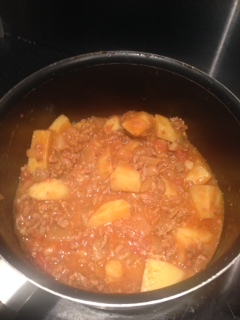
Never having cooking it before, I searched through a number of recipes and cooking styles. Garnering bits and pieces, I set about preparing my own version. Did it work? It worked wonderfully! Although I cooked rice, I didn’t eat it as I found the Keema too filling. Instead, I ate it with a small naan bread. The Teen ate it just as it was.

Traditional Keema contains peas but I left them out. Don’t get me wrong – I love them but not when they have been slow-cooked and turn that icky grey-green colour! They taste fine – it is simply a question of the look of the little spheres!

Instead of opting for a stove top method, I slow-cooked the Keema in the oven. I wanted it to have a richness of flavour which cooking in a pot rarely achieves to the same depth.


Minced Beef Keema
(serves 4-6)

Ingredients
1 large onion chopped roughly
3-4 cloves garlic chopped roughly
1 fresh chilli chopped roughly
1 piece of ginger (about 1.5 inches long) peeled and chopped into small pieces
1 1/2 lbs minced beef
1lb potatoes peeled and cut into large, bite size cubes
1-2 cinnamon sticks (according to taste)
1 teaspoon cumin seeds crushed
1 teaspoon coriander seeds crushed
1 teaspoon turmeric
1/2 teaspoon garam masala
1 tin chopped tomatoes
1 tablespoon tomato puree
1/2 pint good quality beef stock
2 tablespoons sunflower oil
Salt and pepper to season
1/2 teaspoon cayenne pepper (optional – if prefer more of a kick)

Method
1. Pre-heat the oven to 180C
2. Blitz the onion, chilli, ginger and garlic in a food blender to make a paste
3. Heat the oil in a heavy (cast iron) casserole dish
4. Fry the onion paste for 2 minutes and then add the mince, mixing it in with the paste and cooking for about 5 minutes
5. Add in all the spices and cook for a further 2 minutes
6. Add the potatoes, tomatoes, tomato puree, half of the beef stock, salt and pepper
7. Cover and place in the oven
8. Cook at 180C for about 10 minutes and then reduce to 160C, cooking for a further 40 minutes
9. If the mix is too thick, add the remainder of the stock at about the 30 minute point of cooking. Some cayenne pepper may also be added at this  point if you prefer the dish to have more spice
10. When cooked, remove from oven and let stand for about 5 minutes
11. Remove cinnamon stick and give the mixture a gentle stir so as not to break up the potatoes
12. Serve on a plate with rice or in a bowl – on its own or with a warm naan bread.

Standard
Baking and stuff, Flapjacks

Yeah! Flapjacks!

photo 2 (3)


I’ve been very lax recently. While home cooking continued on course, the time to photograph, write up and record was in short supply. Tonight, I accomplished all three and feel pretty proud of myself!

Flapjacks remind me of being in the Girl Guides. I’m not sure why as I never remember making them then. As my sojourn into the Guides was short-lived, it is little wonder my memory is so scratchy! I know I didn’t get a badge for baking them because that was earned for baking brown bread. Hard as a rock because there was a misprint in the recipe, which called for ‘milk’ and not ‘buttermilk’, the Brigade Leader awarded me the badge – begrudgingly.

The Guides was not for me. I liked the fun but balked at the regimentation, the tasks, the awful leather belt, cycling through cold nights to get there and the uniform. I hated my school uniform so it is still amiss to why I raced home to change from one uniform into another to attend the Guides. Why did I leave? Truth be told, I didn’t really leave – I ran away. The word ‘camping’ was mentioned and that was me gone. I have never slept in a tent and never intend to. I like my creature comforts too much – crisp bed linen, heating, hot water and now that I am that bit older, a well stocked mini-bar! Did I enjoy any thing about the my time in the Guides? Sporting my one and only badge could probably be the sum total of it had I stayed long enough to sew it on! And an odd memory of Flapjacks.

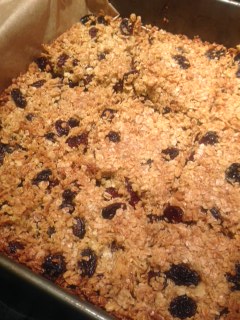
Flapjacks do odd things to our senses. Why is it that when we throw oatmeal into the mix, we kid ourselves it’s healthy? Flapjacks may contain oatmeal but listen closely to the other ingredients and you can hear your arteries harden! Nevertheless, they are still delicious and I can fool myself when looking at them that they are health bars or fashionable energy bars. I used organic oatmeal tonight – not because I was trying to imbibe any extra fibre into these gorgeous baked babies but because it was all I had in the cupboard. I also added sultanas – not for their vitamin content but because they were sitting next to the oatmeal and add an extra dimension of chewiness!

Flapjacks is my favourite traybake but so many get them wrong. They have to be gooey and chewy to be worthy of the name. My all-time favourite is sold in Courtney’s Bakery in Dingle, County Kerry. Chewy and sweet with the corners dipped in chocolate. Perfection!

Flapjacks

Ingredients
4 1/2 ounces butter
4 1/2 ounces brown sugar
9 ounces oatmeal
3 tablespoons golden syrup
Pinch of salt
2 ounces of sultanas (optional)


Method
1. Pre-heat the oven to 180C
2. Grease a baking tin and line with baking parchment (I use one which is 20cm x 20cm)
3. Place all the dry ingredients in a bowl
4. Melt the butter
5. When melted, add the butter and golden syrup to the dry ingredients, mixing until all are combined
6. Turn into the baking tray – press into the corners and flatten down so that the mixture will bake evenly
7. Bake for about 20 minutes or until golden brown
8. Let cool in the tin and when ready, cut into 9 generous or 12 small squares.

Standard
Nollaig na mBan, Spinach and Cream Cheese Lasagne, Vegetarian

Celebrating Nollaig na mBan, 2015

Being a proud Kerry woman, my mother insisted on celebrating Nollaig na mBan. I never questioned it. I took it for granted that all homes in Ireland were the same. I have since discovered the day is only celebrated by pockets throughout Ireland rather than widespread. I read up about this and while many suggest it’s fading out, I can tell you that’s utter nonsense; if anything, it’s on the rise! Where it is celebrated, it is done so with great gusto!

So what is it? Translated into English, Nollaig na mBan means ‘Women’s Christmas’. I couldn’t find out where the tradition comes from but it was generally assumed that, after all the energy and work put into the family Christmas, this was the day the lady of the house had free. Not only that, men took over household duties and child minding while the ladies celebrated with their gal pals and/or other female family members.

Nollaig na mBan was, and is, strictly observed in our home. While the male members of the family didn’t take over the housework, it was the one day in the year my mother did not cook (or more accurately, point blank refused to cook!). For Dad, this was the day my mother went ‘On Strike’! In the days before widespread availability of take-outs and convenience food, my father took us out for dinner. It was that or starve! Not only were we all thankful for the treat but delighted he didn’t cook any of his ‘culinary delights.’ Any day without boiled grey mutton and watery vegetables was a great day!

In more modern times, Nollaig na mBan is celebrated in a number of ways – by dinning out in restaurants with pals or going to the pub. There is something quite cheerful, and yet bizarre, going into a bar which is full of women with the only males found behind the bar working! Alternatively, friends gather at home for a meal or drinks.

The Teen and I always celebrate the day. This year was quiet for us – I simply cooked a nice meal at home. It took a little time but was well worth it as the end result was wolfed down.

And ladies, if you don’t already celebrate Nollaig na mBan – it really is time to start!

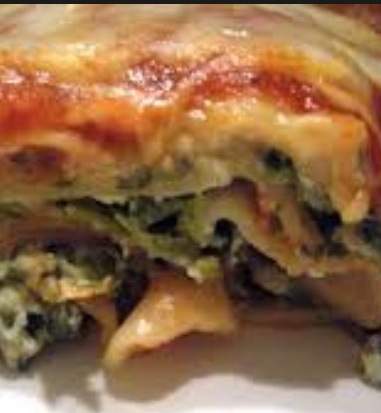
Spinach and Cream Cheese Lasagne
(Serves 4)

Tomato sauce
1 small onion, finely chopped
2 cloves garlic, finely chopped
1 heaped tablespoon finely chopped fresh parsley
½ teaspoon, dried basil
Salt and pepper to taste
½ teaspoon sugar
Tin chopped tomatoes
Olive oil for frying

9-12 Lasagne sheets (no-cook)

Spinach filling
400g baby spinach, washed and chopped roughly
¼ lb mushrooms, chopped finely
1 small onion, chopped finely
1 clove garlic, chopped finely
Freshly grated nutmeg – about ½ teaspoon
½ cup finely grated Parmesan
1 Mozzarella cheese ball – slice one half thinly and cut the other half into small pieces
3 generous tablespoons, cream cheese
Olive oil for frying
Salt and Pepper

Method
Pre-heat oven at 170C

Tomato sauce
1. In a saucepan, heat the oil and fry the onion until soft (about 5 minutes)
2. Add in the garlic and fry for another 1-2 minutes
3. Add in the herbs, tomatoes and sugar
4. Season with salt and pepper
5. Put in blender and whisk until smooth but still textured

Spinach filling
1. In a saucepan, heat the oil and fry the onion until soft (about 5 minutes)
2. Add in the garlic and fry for another 1-2 minutes
3. Add in the mushrooms and cook until soft
4. Add in the spinach and wilt in the heat
5. Add 2-3 teaspoons of Parmesan, the nutmeg and the cream cheese and stir until combined
6. Season with salt and pepper

Putting the lasagne together
1. Place a few tablespoons of tomato sauce at the bottom of the pan
2. Cover with sheets of lasagne and then spread a third of the spinach filling over the pasta before dotting with small pieces of mozzarella
3. Repeat until finished
4. Cover with sheets of lasagne, pour over the tomato sauce, sprinkle with parmesan and add the sliced mozzarella
5. Cover loosely with foil – sealed at the edges but loose on top to avoid contact with the topping
6. Cook for 35 minutes
7. Remove the foil and cook for a further 5-10 minutes
8. Allow stand for 5 minutes
9. Serve with a dressed green salad

Standard
Baking and stuff, Chocolate Fudge Cake

The “famous chocolate cake”…?

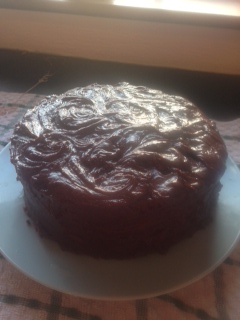
Christmas and the decision of what to bring to the yuletide table reared its head once again. Thankfully, the decision was already made when my cousin told me to bring my “famous chocolate cake”. I burst into laughter – never heard such silliness. I mentioned it to one of my neighbours and he remarked “I’ve heard that cake is the stuff of legends.”

 As someone to whom the magic of chocolate is completely lost, I was stunned by this reaction. It’s always been the Teen’s favourite cake but I thought that was simply due to the high concentration of chocolate. It’s a bit of a tricky one to make but obviously worth the effort judging by the feedback I’m getting!


Ingredients
Cake
4 ounces unsalted butter
7 ounces castor sugar
6 large eggs
2 teaspoons vanilla essence
4 ounces plain flour
2 ounces cocoa powder
1 teaspoon baking powder
Pinch of salt

Method
1. Pre-heat the oven to 180C
2. Prepare two circular cake tins with grease proof paper
3. Melt the butter in a small saucepan and leave aside to cool
4. Sift the flour, cocoa powder, baking powder and salt together three times and leave aside
5. Place the eggs and sugar in a bowl and beat with an electric whisk until light cream in colour and ripples can be left in the mixture
6. Mix in the vanilla essence
7. In three stages, fold in the dry ingredients until mixed completely
8. Add in the butter and blend thoroughly
9. Divide this batter into the two tins and bake for 20-25 minutes in the oven
10. The cake is done when tested with a skewer which comes out clean and the cake is coming away from the sides of the tin
11. Remove the cakes from the tins and leave to cool on a baking rack

Icing
4 ounces icing sugar, sifted
2 ounces soft unsalted butter
1 ounce drinking chocolate powder
2 tablespoons milk

Method
1. Blend all of these together
2. Spread on one side of the cake and sandwich together

Frosting
8 ounces icing sugar, sifted
2 ounces unsalted butter
3 1/2 ounces dark chocolate (75% or over)
3 tablespoons milk
1 teaspoon vanilla essence

Method
1. Break the chocolate into pieces
2. Place all the ingredients over a low heat and allow to melt
3. When melting, keep stirring to insure all ingredients are mixed together
4. When melted, remove from the heat and keep stirring until the mixture cools and thickens*
5. When the mixture has thickened and is glossy, gently spread over the sides and top of the cake (I use a flat cake knife and do the edge first and then the top)

*If you leave the icing to cool without stirring, it will become unusable

So there you have it. Chocolate, chocolate and more chocolate. A nice cake or the stuff of legends? That, my dearies, is up to you to decide!


Standard
Beef, Spaghetti and Meatballs

Spaghetti, Meatballs and Song…

This week, I resurrected one of the Teen’s favourite dinners from when she was a tot. Not only did she like the dish for its flavour but because it always involved singing too. How can you have spaghetti without belting out…

On top of spaghetti, all covered with cheese
I lost my poor meatball when somebody sneezed
It rolled in the garden and onto the floor
And then my poor meatball, it rolled out the door
It rolled in the garden and under a bush
And then my poor meatball was nothing but…
MUSH…

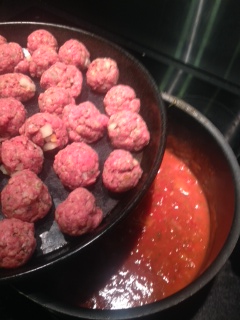
I dreaded making this dish as I found the preparation sooooooo tedious. That was then. Originally, I hand-rolled each and every meatball, coated each in flour and pan fried each and every one of them before adding them to the sauce. One day, my pal Jimmy, who’s a chef, guided me towards making this a far easier meal to make. Using a small ice cream scoop cuts out work and makes the meatballs the same size. Baking them in the oven on a tray takes out even more of the work and more importantly, with no added oil, removes the frying aspect of the dish. Once the process got easier, the Teen asked for it even more! Eh…thanks, Jimmy… 🙂

For us, Spaghetti and Meatballs remains a fun dish full of nostalgia and it’s a great dish when cooking for pals. This recipe feeds 4-6 and is well received by young and those who like to remember being young.  It also remains a very tasty dish where spaghetti can be swapped for different shaped pasta or, dare I say it, rice?!?! There is a kick to this recipe as it contains chilli. If you don’t want it spicy, simply ditch the chilli!


Spaghetti and Meatballs

Sauce
2 tablespoons olive oil
1 medium onion, finely chopped
2 cloves of garlic, finely chopped
1 chilli, finely chopped (optional)
1 heaped tablespoon of flour
3 fluid ounces of good quality beef stock
1 heaped tablespoon, tomato puree
1 tablespoon parsley, chopped finely
1 tablespoon basil, chopped finely
2 tins chopped tomatoes
Salt and ground pepper to season

Meatballs
2lbs minced beef
1 small onion, chopped as finely as possible
1 heaped cup breadcrumbs
1 large egg, beaten
Good shake of dried parsley
Salt and Pepper

To serve
Cooked pasta
Grated cheese

Method
1. Preheat the oven at 180C
2. To make the meatballs, blend all the ingredients together
3. With a small ice cream scoop, shape the mince mixture into walnut size pieces and place on a baking tray
4. When the oven is heated, place the baking tray in the oven and cook for 10-12 minutes
5. For the sauce, heat the oil in a heavy saucepan
6. Add the onion and cover with a lid, allowing the onion to cook until soft (for about 5 minutes)
7. Add the garlic (and chilli) and cook for another two minutes
8. Add the flour and allow to cook for a minute
9. Add the stock in three stages, making sure to blend it with the flour, onion and garlic mix
10. Blend in the tomato puree and then sprinkle in the herbs
11. After adding the tins of tomatoes to the mix, season with salt and black pepper
12. Allow to simmer
13. Place in a blender and blitz for about one minute until smooth
14. Return to the pot and heat through
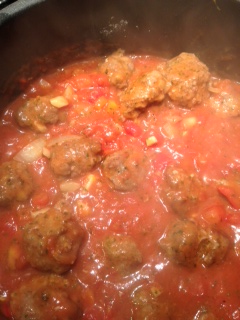
15. Add the meatballs and cover with the sauce
16. Place the lid on the saucepan and allow to simmer for 10 minutes
17. Serve with spaghetti or pasta shapes of your choice and a big handle of grated cheese
18. And sing…!


photo 2 (1)

Standard
Lamb, Slow Cooked Shanks

Slow cooked lamb shanks  

When the weather is freezing, my need for red meat escalates accordingly. This time I didn’t want anything too heavy so I threw together the following recipe for lamb shanks cooked in the oven. Instead of using red wine, which I felt might overpower the dish, I opted for white wine and it worked very well.

While light in consistency, the sauce was quite intense in flavour. When I tasted it, I longed for some fresh French Bread to dip into it as it was delicious; I’d be completely happy with that on its own! The final dish? It’s rather hearty but perfect winter fare. I ate mine with creamy mashed potato because I am such a creature of habit while the Teen chose whole wheat pasta and both complimented it very nicely indeed. Other alternatives would be to serve it with green beans or flageolet beans instead of potatoes, rice or pasta.

The dish takes time to cook but we think it’s worth it.

Lamb Shanks

(Serves 4)

Ingredients
4 lamb shanks
1 large onion, chopped finely
6 large cloves of garlic, chopped finely
4 large carrots, diced
12 fluid ounces white wine
Tin of chopped tomatoes
4 fluid ounces good quality chicken stock
Bouquet garni
Salt and ground black pepper
Sunflower oil for frying

Method
1. Preheat the oven to 220C
2. Heat about 2 tablespoons of oil in a heavy casserole dish
3. Brown each of the lamb shanks, removing each from the dish when done and setting aside
4. Add another tablespoon of oil and when hot, add the onion
5. Cover with the lid and allow to soften for a couple of minutes
6. Add the garlic and cook for another few minutes
7. Mix in the carrots, coating them with the onion and garlic mix
8. After cooking these for a further two minutes, add the wine and bring to a gentle boil
9. Stir in the tomatoes and stock
10. Season with salt and pepper and tuck the bouquet garni into the sauce
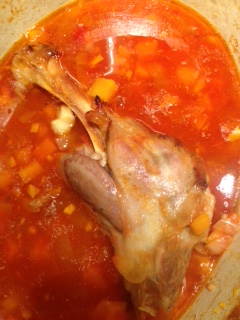
11. Place the lamb shanks on top of the sauce and cover with the lid
12. Pop into the oven and after 10 minutes reduce the heat to 165
13. After 40 minutes, check the casserole and cover the meat with sauce
14. Return to the oven
15. After 1 hour and 45 minutes, remove the lid and allow the sauce to reduce down for 15 minutes
16. Replace the lid and let it stand for 15 minutes before serving with an accompaniment of your choice.

Standard
Ratatouille, Ratatouille, Vegan, Vegetarian

Ratatouille – not exactly traditional but we love it!

Once every few weeks, I make Ratatouille. The choice can be for any or all of three reasons – we really like it, what’s in the fridge and its versatility. This rustic mix of vegetables is a firm favourite in this house where it is eaten alone, with roast chicken and steamed new potatoes, with steak and roast potatoes, with fish, with pasta, with rice…

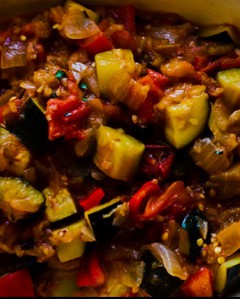
There’s a fierce amount of chopping involved but it is so worth it. While I generally stick to the traditional ingredients, I have changed my cooking method. Instead of using the stove, I now prepare and cook it in a heavy casserole dish (lid on). I think the flavour is a tad deeper while the Teen thinks the cooking method has no effect on the flavour; she believes they taste the exact same. What I particularly like is the fact that I can pop it in the oven and not have to watch it!

French traditionalists will probably baulk at my approach and recipe. I invite them to my home any time if they want to cook the dish for me! 🙂


 Ratatouille

Ingredients
3 tablespoons extra virgin olive oil
2 large aubergines, cubed
2 large courgettes, cubed
2 red peppers (or yellow peppers), chopped
1 large onion, roughly chopped
4 cloves of garlic, finely chopped
4 tomatoes, skinned and chopped (or a tin of chopped tomatoes)
1 tablespoon tomato puree (a second can be added mid cooking if a more intense flavour is preferred)
2 teaspoons Herbs de Provence
2 teaspoons chopped parsley
Salt and ground black pepper
A heaped teaspoon of sugar (optional)

Method
1. Slice the aubergines lengthways, score and sprinkle generously with salt. Leave aside for about 30 minutes. Wash and then pat try. Chop into chunks
2. Preheat oven to 180C degrees
3. Heat the olive oil in a heavy casserole dish. Add the onion, cover and sweat for about 5 minutes
4. Add the garlic and cook for a further 2-3 minutes
5. Add the aubergines, peppers and courgettes. Cover and sweat for about 5 minutes
6. Stir in the tomato puree followed by the fresh or tinned tomatoes
7. Add the herbs
8. Season with salt and pepper
9. Cover and place in the oven for 30 minutes
10. Take out of the oven, stir and return for another 20 minutes. At this point, a second tablespoon of tomato puree can be added. Sugar may also be added if the tomatoes seem to make the mix a little bitter
11. Remove from the oven and leave to stand for about 10 minutes before serving.


Standard
Beef, Curry

Beef Curry with no substitutions!

photo (2)

Curry? While a firm favourite with many, it doesn’t seem ‘cultured’ enough for a dinner party. That’s what I thought but this recipe I tweaked from Hardeep Singh Kohli’s ‘Oxtail Curry’ is always well received. From the cook’s point of view, it’s perfect. Yes, there’s a bit of preparation and cooking at the start but once it’s in the oven, there’s about two hours free until serving. The dish is so rich, all that’s needed is Naan Bread or plain Basmati Rice.

What’s so good about this recipe? For me, it’s the spicing. When I read the recipe first, I found the measures a bit daunting. Everything else is a teaspoon of this and a half teaspoon of that where as this recipe calls for more robust flavouring. It all makes for a deliciously, deep-flavoured sauce. And there’s something about the spices chosen too – they all tend to be larder essentials so there’s no sourcing anything unusual in far away Asian Markets.

Meat? I made the original recipe with oxtail and it was totally sublime. Getting good quality, meaty and affordable, oxtail, however, is not always possible so I tried this with rib steak and it worked perfectly. This cut of steak is great for slow cooking and absorbs the flavour more effectively than other cuts.

The recipe is great as it is. I couldn’t resist experimenting but when I did, it never turned out as nice as the original. The sauce is very rich so I thought maybe I would use tinned tomatoes instead of passata to make it lighter. What a mistake! It was nice but it was not half as nice as when passata is used. I learnt my recipe.

This is Beef Curry with no substitutions!

Other praise for this recipe? Apart from the fact that it is all cooked in the same heavy casserole dish, it is gluten free, nut free and dairy free. Oh, and it’s even better the next day!


Beef Curry

Ingredients
2lbs rib steak, cut in equal chunks
4 tablespoons sunflower oil
1 tablespoon cumin seeds
2 star anise
4 cardamon pods, lightly bruised with the back of a knife
5 peppercorns
4 large red onions, finely chopped
5 garlic cloves, finely chopped
1 chilli, finely chopped (preferably a Scotch Bonnet)
1.5 inch piece ginger, grated
½ orange, 3 strips of pared zest and the juice
1 tablespoon tomato puree
1 tablespoon turmeric
1 tablespoon garam masala
1 tablespoon ground coriander
11 fluid ounces passata
Salt and freshly ground black pepper
2 bay leaves
Serve with plain boiled Basmati rice

Method
1. Preheat the oven to 180C
2. Chop the onions, garlic and chilli as finely as possible
3. Grate the ginger
4. Heat the oil to a medium heat in a heavy casserole dish. Add the cumin seeds and allow to sizzle for a minute (be careful not to let them burn)
5. Add the star anise, cardamon pods and peppercorns, cooking for one minute
6. Reducing the heat, add the onion, ginger, chilli and garlic and cook until the onions start to become soft (about ten minutes)
7. Add the orange zest and continue to cook the onions for another ten minutes (or until they look carmelised)
8. Add the tomato puree and cook for 2 minutes
9. Add in the turmeric, garam masala and ground coriander and stir through the mix. At this point, add salt and ground black pepper (more can be added at the end)
10. Increasing the heat, add the meat chunks. Cook for about 3 minutes to brown the pieces
11. Add the passata and bring to a simmer. Include the bay leaves too
12. Place the lid on the casserole dish and ransfer to the oven, reducing the heat to 150C after about 10 minutes. Cook for one hour
13. Stir in the orange juice and allow to cook for another 30 minutes
14. Take the dish out and leave covered for another 20-30 minutes while the plain Basmati rice is cooking

Standard